
Market Update · 12 min read
Florida Condo and Townhouse Sales Rose 3.1% in the Third Quarter
Florida condo and townhouse closed sales rose 3.1% year over year in the third quarter of 2026, to 22,664 closings, with a median sale price of $295,000, unchanged from a year earlier. September closed sales were 7,179, the September median was $293,500, and condo supply stood at 7.7 months against 4.4 months for single-family homes.

Florida condo and townhouse closed sales rose 3.1 percent year over year in the third quarter of 2026, to 22,664 closings from July through September. The third-quarter median sale price for condos and townhouses was $295,000, unchanged from a year earlier. Single-family closed sales edged up 0.2 percent over the same quarter. This briefing covers statewide Florida condo, townhouse, and single-family data for the third quarter; the September national existing-home sales pace of 3.99 million in our September briefing is the separate national file.
The lower condo price point matters while affordability stays tight for many buyers. That price advantage shows up clearly in September: the condo and townhouse median was $293,500, a full $121,500 below the $415,000 single-family median for the same month. Buyers also had more choice among condos, with 7.7 months of supply in September against 4.4 months for single-family homes. Statewide context lives on Florida markets, and purchase and sale work lives on residential.
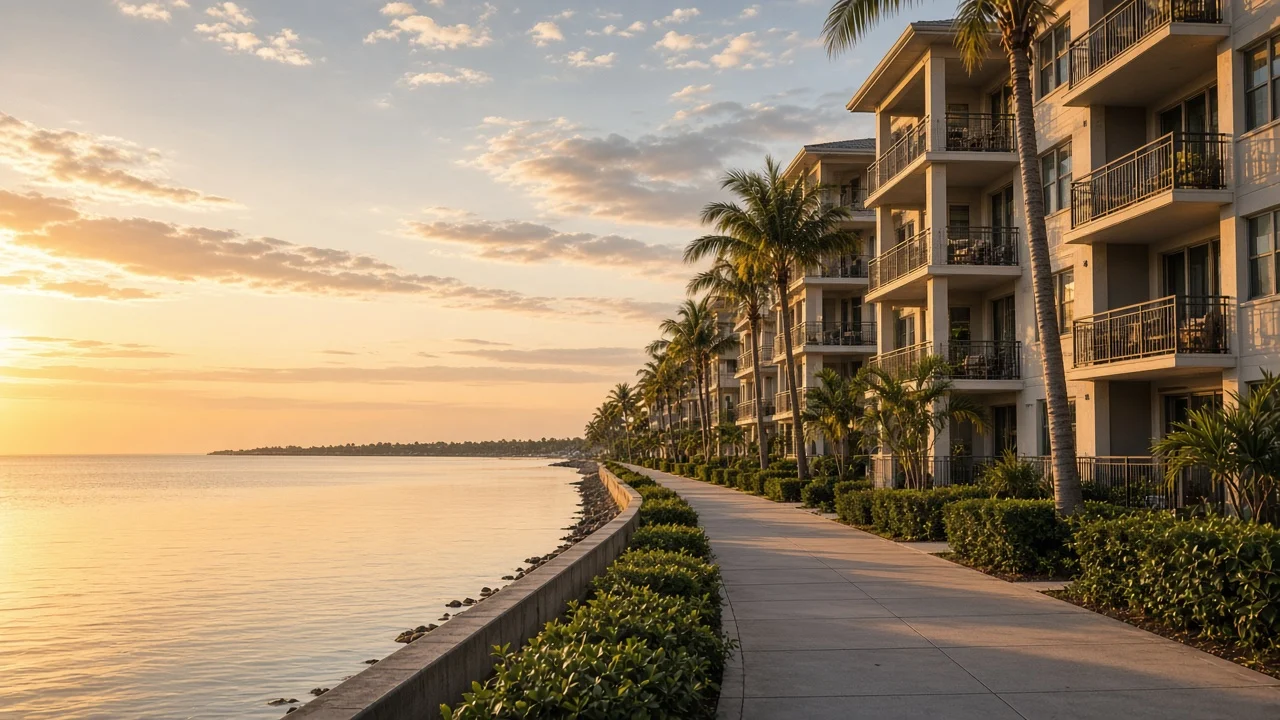
The third-quarter scoreboard
Statewide Florida figures for the third quarter and for September:
- Condo and townhouse closed sales, third quarter: 22,664 — up 3.1% year over year.
- Single-family closed sales, third quarter: up 0.2% year over year.
- Condo and townhouse median sale price, third quarter: $295,000 — unchanged from a year earlier.
- Condo and townhouse closed sales, September: 7,179 — eight fewer closings than a year earlier, essentially level with last September.
- Condo and townhouse median sale price, September: $293,500 — down 1.8% year over year.
- Single-family median sale price, September: $415,000 — the condo median sat $121,500 below it.
- New pending sales, September: condo and townhouse pending sales declined 3.5%; single-family pending sales fell by more than 7.5%.
- Months of supply, September: 7.7 months for condos and townhouses; 4.4 months for single-family homes.
Read the quarter and the month together. The quarter shows condo closings growing faster than single-family closings across July, August, and September combined. September alone shows condo closings holding level with a year earlier while new pending sales eased. Both statements come from the same statewide data, and each describes a different window of time.
A steadier quarter for condos than for single-family homes
A 3.1 percent gain in condo and townhouse closings, against a 0.2 percent gain for single-family homes, made condos the faster-growing part of Florida's resale market in the third quarter. Higher mortgage rates shaped the wider market through the quarter, and condos still added closings year over year. For a buyer priced out of a single-family search, the condo and townhouse shelf offered a lower entry price and a deeper bench of listings. For a seller, that same depth means a buyer touring your unit likely toured several similar units in the same week.
September's 7,179 condo closings, eight below a year earlier, show a market holding its year-ago pace at the end of the quarter. Pending sales add the forward-looking line: condo pending sales declined 3.5 percent in September, and single-family pending sales fell by more than 7.5 percent. Pending sales count homes that have gone under contract and are moving toward closing, so September's pending figures give an early read on closings in the weeks ahead. Condo contracts eased by a smaller margin than single-family contracts in that September comparison.
Contract follow-through deserves attention after a home goes pending. Our September contract-cancellations briefing covered Redfin's national finding that 14.5 percent of homes that went under contract nationally in September were canceled. That figure is a national Redfin measure. It adds useful context for why sellers track a contract all the way to the closing table, and this quarter's pending-sales lines show the volume of Florida contracts entering that pipeline.
Price held flat for the quarter and softened in September
The third-quarter condo median of $295,000, unchanged from a year earlier, tells a buyer that the middle of the Florida condo market closed the quarter at last year's price level. September's median of $293,500, down 1.8 percent year over year, shows a softer final month inside that flat quarter. A median is the middle closing price: half of the condos and townhouses that closed sold above it and half sold below it. Individual buildings, floors, views, condition, and association health move a specific unit well above or below the statewide middle.
The $121,500 gap between September's $293,500 condo median and the $415,000 single-family median is the affordability story in one line. A buyer comparing a condo against a single-family home in the same community starts with that price distance, then adds the full monthly picture for each address. Association fees, reserves, and potential assessments add to condo ownership costs beyond the sale price, so a careful buyer reads the association budget, the reserve position, and any assessment schedule for the specific building alongside the purchase price. Those building-level documents set the real monthly cost of a specific unit, and they vary from one association to the next.
Owners who live in their condo as a primary residence can also look at the property-tax side of ownership. Our Florida homestead property-tax briefing works through how homestead treatment applies to a primary residence, and a condo used as a primary residence sits in that same homestead conversation. Confirm your own parcel and exemption status with the county property appraiser, because the parcel card governs your bill.
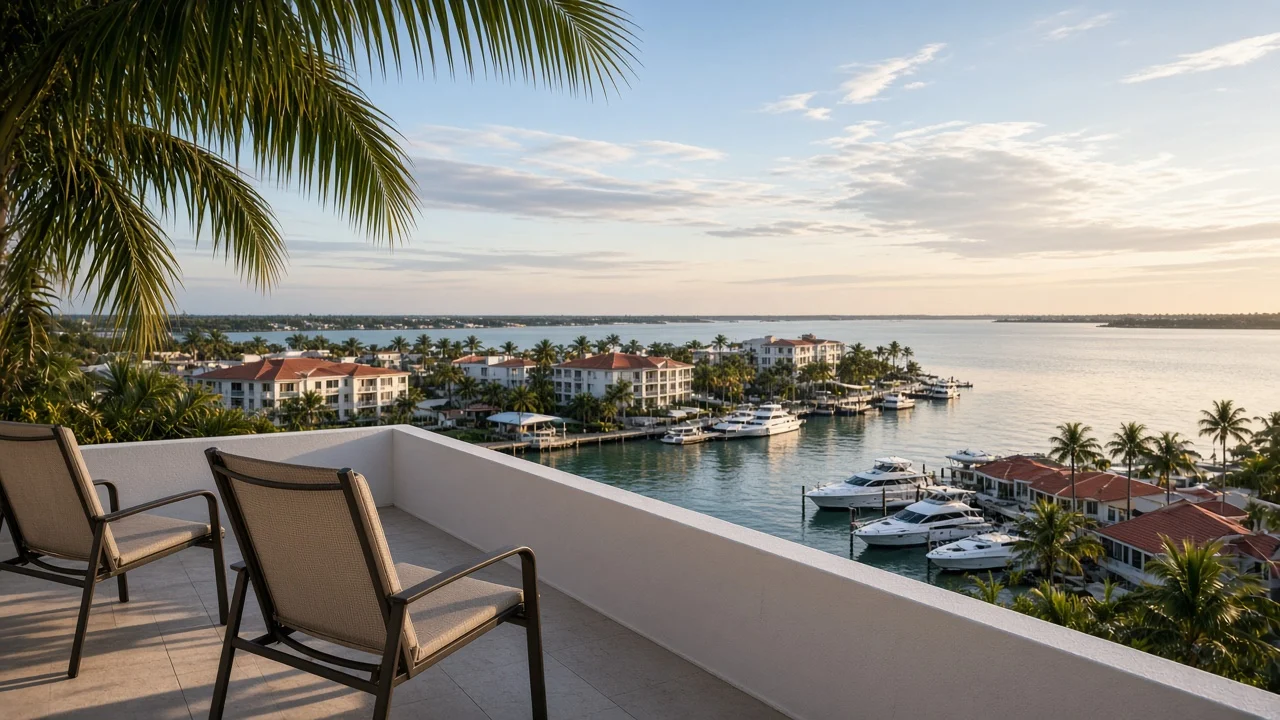
Buyers had more condo choice in September
September's supply figures draw the clearest practical line in this data. Condos and townhouses carried 7.7 months of supply, while single-family homes carried 4.4 months. Months of supply estimates how long the current pace of sales would take to sell the homes available at month's end. A 7.7-month figure gives condo buyers more listings to compare, more time to review association documents, and more room to negotiate on price and terms. It gives condo sellers more direct competition, which rewards accurate pricing, good condition, and complete documentation from the first week on the market.
That negotiating room connects with what Federal Reserve contacts reported earlier this month. Our Federal Reserve Beige Book briefing covered Sixth District home sales improving moderately, with more Florida homes closing below the asking price. A buyer shopping in a 7.7-month supply market can bring that pattern into a specific negotiation with comparable closed sales for the building and the neighborhood. A seller can meet it by pricing from recent closings in the same complex at the start, which keeps the listing fresh while buyer attention is strongest.
New construction forms the longer-run supply backdrop. Our September housing-starts briefing put national starts at 1,221,000 and completions at 1,192,000, down 14.0 percent from a year earlier. Finished homes and resale condos meet the same buyer at different price points and on different timetables, and a shopper benefits from comparing a completed new home, a home under construction, and a resale condo side by side with full monthly costs for each.
The rate a condo buyer brings to that $295,000 median
Financing turns the median price into a monthly payment. The most recent mortgage briefing on this site, Freddie Mac's October 15 survey, put the 30-year fixed at 7.40 percent and the 15-year fixed at 6.71 percent. The prior survey, the October 8 Freddie Mac briefing, also printed 7.40 percent on the 30-year. A condo buyer writing an offer this week underwrites the purchase in that rate environment, and the lender's written quote for the specific unit and building sets the actual note rate.
Here is the payment illustration, labelled as an illustration. Take the third-quarter condo median price of $295,000 and a buyer putting 20 percent down. The loan amount is $236,000. At 7.40 percent for 30 years, principal and interest is $1,634.02 a month, using M = P × r(1 + r)^n ÷ ((1 + r)^n − 1), with r at the monthly rate and n at 360 months. On the full $295,000 as a loan amount, principal and interest at 7.40 percent is $2,042.52 a month. Both figures cover principal and interest only. A specific condo's monthly cost also includes property taxes, insurance, association fees, and any mortgage insurance the loan requires, and those lines come from the building, the parcel, and the lender quote for that unit.
A buyer who lines up the $295,000 statewide median, a 7.7-month supply shelf to shop from, and a dated written quote has the three numbers that frame a real condo search. From there, the work gets specific quickly: the association budget and reserves, the insurance position, the unit's condition, and the building's own sales history. That address-level review is where a statewide median becomes a sound decision on one home.
What condo buyers can use
For a buyer, the third quarter offers a workable combination: closings up 3.1 percent, a flat $295,000 median, and 7.7 months of supply to shop. Use the supply. Tour enough units in your target buildings to learn the floor plans, the view premiums, and the association differences. Read the budget, the reserve study position, and any assessment schedule before you write, and pair the asking price with recent closings inside the same complex. Bring a current written rate quote to the offer, because the payment at 7.40 percent survey conditions decides how much home your monthly budget carries. Buyers starting their search can begin with Florida markets and residential.
September's softer median, down 1.8 percent to $293,500, also rewards patience with evidence. A buyer who finds a unit that has sat while similar units closed lower has a factual basis for an offer grounded in those closings. The seller's situation, the unit's condition, and the building's documentation all shape how that conversation goes, and a clean, well-documented offer travels well in a market with plenty of alternatives on the shelf.
What condo sellers can use
For a seller, 7.7 months of supply frames the whole assignment. Your buyer has choices, and the units that sell first tend to pair a closing-based price with strong presentation and a complete association packet ready for review. September pending sales for condos declined 3.5 percent, a smaller decline than single-family homes showed, and well-priced condos continued to attract contracts through the quarter. Price from the building's recent closings, prepare the unit for the comparison tour your buyer is already taking, and keep the association documents organized so a buyer's review moves quickly from contract to closing.
A flat quarterly median also helps a seller set expectations with precision. The middle of the statewide market closed at $295,000, the same as a year earlier. A unit in strong condition, in a building with healthy reserves and a clear assessment picture, can make its own case above that middle with comparable sales. A unit that needs work, or a building facing a large assessment, meets buyers who will price that work into their offers. Early honesty about condition and building costs keeps a contract intact through inspection and association review.
What owners can use
For an owner, this quarter's data describes the market your home sits in today. Condo values at the median held level for the quarter, supply ran deeper than the single-family market, and closings grew faster than single-family closings. An owner weighing a sale can read those three lines as a market that is transacting at steady middle prices with active buyers and real competition among listings. An owner staying put can use the same data to watch their building's position: how units in the complex are priced, how long they take to sell, and how the association's reserve and assessment picture compares with the buildings a buyer will tour next.
Owners also carry the long view on building costs. Association fees, reserves, and potential assessments add to ownership cost beyond the original sale price. Reading each budget and reserve update as it arrives, and planning for assessments early, keeps those costs manageable and keeps the unit ready for a future sale in a market where buyers review building finances closely.
The quarter in one read
Florida's condo and townhouse market closed the third quarter with 22,664 sales, up 3.1 percent, a $295,000 median that held level, and a September supply of 7.7 months that gave buyers genuine choice. Single-family sales rose 0.2 percent in the quarter, with a September median of $415,000 and 4.4 months of supply. Lower entry prices helped condos outpace single-family growth while mortgage rates stayed elevated, and association costs remain the building-level detail that completes the monthly picture for every unit. Buyers who shop the deeper condo shelf with documents in hand, sellers who price from their building's own closings, and owners who stay current on association finances are all working from the strongest position this data supports.
Payment illustrations use the standard fully amortizing formula at the stated rate and loan amount and cover principal and interest only.
For help comparing a specific Florida condo or townhouse — price, association documents, and a written payment quote — contact Bridge Point Business & Real Estate Advisors at 352-515-0226 or request a consultation.
Data: Florida Realtors Research Department, third quarter 2026.
Questions people ask first
Quick answers to common questions about this topic.
How much did Florida condo and townhouse sales rise in the third quarter of 2026?
Florida condo and townhouse closed sales totaled 22,664 statewide from July through September 2026, up 3.1% year over year. Single-family closed sales rose 0.2% over the same quarter.
What was the Florida condo median sale price in the third quarter of 2026?
The third-quarter median sale price for Florida condos and townhouses was $295,000, unchanged from a year earlier. September's median was $293,500, down 1.8% year over year.
How many Florida condos sold in September 2026?
September condo and townhouse closed sales totaled 7,179 statewide, eight fewer than a year earlier. New pending sales for condos declined 3.5% in September, compared with a decline of more than 7.5% for single-family homes.
How does the Florida condo median compare with single-family homes?
September's condo and townhouse median of $293,500 sat $121,500 below the $415,000 single-family median for the same month. That lower price point matters while affordability remains a challenge for many buyers.
How much condo supply did Florida have in September 2026?
Florida had a 7.7-month supply of condos and townhouses in September 2026, compared with 4.4 months for single-family homes. That deeper supply gives condo buyers more listings to compare and more room to negotiate, while sellers face greater competition.
What would principal and interest be on a loan tied to the $295,000 condo median?
As an illustration, a $236,000 loan — 80% of the $295,000 third-quarter median price, reflecting 20% down — at 7.40% for 30 years carries principal and interest of $1,634.02 a month. On the full $295,000 as a loan amount, principal and interest at 7.40% is $2,042.52 a month. These figures cover principal and interest only and exclude taxes, insurance, association fees, and mortgage insurance.
Talk with Bridge Point
Considering a purchase or sale in this market? Local guidance can make a meaningful difference.
Schedule a consultation
