
Local Market Guide · 22 min read
Florida’s West Coast Horse Belt Starts in Ocala. Marion Had 23,928 Horses on Farms.
The 2022 Census of Agriculture counted 23,928 horses and ponies on Marion County farms and $139.5 million in equine sales, first in Florida and fourth in the United States. The same count puts horses on farms in Levy, Pasco, Hernando, Citrus, Sumter, and Hillsborough. Together those seven counties held 37,442 of Florida’s 83,114 farm horses. The public riding land runs from the Florida Horse Park and Ross Prairie to the Withlacoochee State Forest and Jay B. Starkey Wilderness Park.

Marion County is the horse economy on this side of the peninsula. The 2022 Census of Agriculture counted 23,928 horses and ponies on Marion farms as of December 31, 2022, and it counted $139,533,000 in sales of horses, ponies, mules, burros, and donkeys. That sales line is rank 1 among the 62 Florida counties that produced the commodity, and rank 4 among 2,907 U.S. counties. Florida’s farm inventory of horses and ponies was 83,114. Marion’s 23,928 divided by 83,114 is 28.8 percent of the state’s farm horses. The state’s sales of the same equine group were $214,890,000. Marion’s $139,533,000 divided by $214,890,000 is 64.9 percent of those sales.
The belt a buyer actually drives is wider than Ocala, and it drains toward the Gulf. Levy County, on Marion’s northwest line, had 4,927 horses and ponies and $11,639,000 in equine sales, third in Florida. Hillsborough had 2,564 horses. Pasco had 1,854. Sumter had 1,614. Hernando had 1,466. Citrus had 1,089. Those seven counties together are 23,928 plus 4,927 plus 2,564 plus 1,854 plus 1,614 plus 1,466 plus 1,089, which is 37,442 horses. 37,442 divided by 83,114 is 45.0 percent of Florida’s farm horses, on the inland side of the Gulf coast rather than on the beach.
The census counts horses on farms. The Florida Department of Agriculture and Consumer Services’ 2024 equine best-management manual, incorporated in Rule 5M-14.002, cites a 2023 American Horse Council report of more than 332,000 horses in the state and an economic impact of $12.78 billion. That is a broader population than the farm inventory. County comparisons on this page use the census.
Statewide context stays on Florida markets. A purchase or a sale sits on residential. The service doors are buying and selling. Marion’s people count is the separate file: 433,765 on April 1, 2025.
The census scoreboard
Every figure in this section is the 2022 Census of Agriculture, county profiles for inventory and sales, and Table 18 for the number of farms that reported horses. Sales are in the census commodity line for horses, ponies, mules, burros, and donkeys. Inventory is horses and ponies on December 31, 2022. A sales rank is not a listing price, and a farm average is not a median sale.
- Florida: 9,832 farms reported horses and ponies in 2022, down from 12,469 in 2017. The difference is 2,637 farms. 2,637 divided by 12,469 is 21.1 percent. Inventory fell from 90,638 to 83,114, a drop of 7,524 horses, or 8.3 percent. Equine sales were $214,890,000.
- Marion: 3,329 farms, 290,691 acres in farms, average farm 87 acres. Pastureland was 134,013 acres. 134,013 divided by 290,691 is 46.1 percent of the farm acres. Horses and ponies: 23,928, on 1,761 farms. 1,761 divided by 3,329 is 52.9 percent of Marion farms. 23,928 divided by 1,761 is 13.6 horses on the average farm that reported them. Equine sales $139,533,000, which is 139,533 divided by the county’s total agricultural sales of $220,578,000, or 63.3 percent of Marion’s farm sales. State rank 1. U.S. rank 4.
- Levy: 993 farms, 198,497 acres, average farm 200 acres, pastureland 53,730 acres. Horses and ponies: 4,927. Equine sales $11,639,000. State rank 3. U.S. rank 17.
- Hillsborough: 1,992 farms, 201,712 acres, pastureland 74,675 acres. Horses and ponies: 2,564. Equine sales $2,869,000. State rank 7. U.S. rank 87.
- Pasco: 1,190 farms, 132,011 acres in farms, down 31 percent from 2017, average farm 111 acres, pastureland 71,564 acres. Horses and ponies: 1,854. Equine sales $3,103,000. State rank 6. U.S. rank 81.
- Sumter: 1,117 farms, 146,165 acres, pastureland 61,499 acres. Horses and ponies: 1,614. Equine sales $848,000. State rank 12.
- Hernando: 761 farms, 67,187 acres in farms, up 34 percent from 2017, average farm 88 acres, pastureland 26,389 acres. Horses and ponies: 1,466. Equine sales $2,109,000. State rank 10. U.S. rank 118.
- Citrus: 602 farms, 51,098 acres, pastureland 27,493 acres. Horses and ponies: 1,089. Equine sales $503,000. State rank 16.
Read the ranks next to the acres. Marion’s sales dwarf the counties around it because the training and sales economy sits there, not because every Marion parcel is a large farm. The profile says 1,924 of Marion’s 3,329 farms, 58 percent, are 10 to 49 acres. Levy’s average farm is 200 acres, and its cropland, 70,837 acres, is larger than its pasture. Pasco still ranks sixth in equine sales after losing 31 percent of its land in farms since 2017. Hernando’s land in farms grew 34 percent, and its equine sales rank is tenth. Those are different markets that share a horse.
Ocala and the unincorporated farm grid
The department’s horse-industry page titles the Ocala-Marion section Horse Capital of the World and places the first Florida horse farm in Ocala in the 1930s. The same page names the venues the area hosts: the World Equestrian Center, Horses in the Sun, the Live Oak combined-driving event, the Sunshine State Games equestrian classic, and the Florida Agricultural Center and Horse Park. The Ocala Breeders’ Sales recorded over $1 billion in Thoroughbred sales from 2010 to 2018. That is the department’s date range. It is not a current annual total.
The 2024 manual says the highest density of equine operations in the state is in Marion County. It cites the 2023 council report for 561,000 acres preserved and used for horse-related purposes in Florida, 210,000 of them in Marion, and 195,000 of those inside the county’s Farmland Preservation Area. Thoroughbreds in that report are 87,600 animals, about one in four of the broader state herd. The manual and the census are answering different questions. The preservation acreage is the council figure the manual prints. The 134,013 acres of pastureland are the census figure for all of Marion’s farms, horses and otherwise.
The people live mostly outside the cities. BEBR’s April 1, 2025 estimates put Marion at 433,765. Ocala is 71,017. Belleview is 6,121. Dunnellon is 2,022. Reddick is 466. McIntosh is 460. Unincorporated Marion is 353,679, and the five cities together are 18.5 percent of the county. A horse search that starts and ends inside the Ocala city limits is the wrong map. Reddick is the small north town on the farm grid. Dunnellon is the small river town where the Withlacoochee meets the road west. Belleview is the south town. Ocala is the service city: feed, veterinary clinics, the sales pavilion, and the errands.
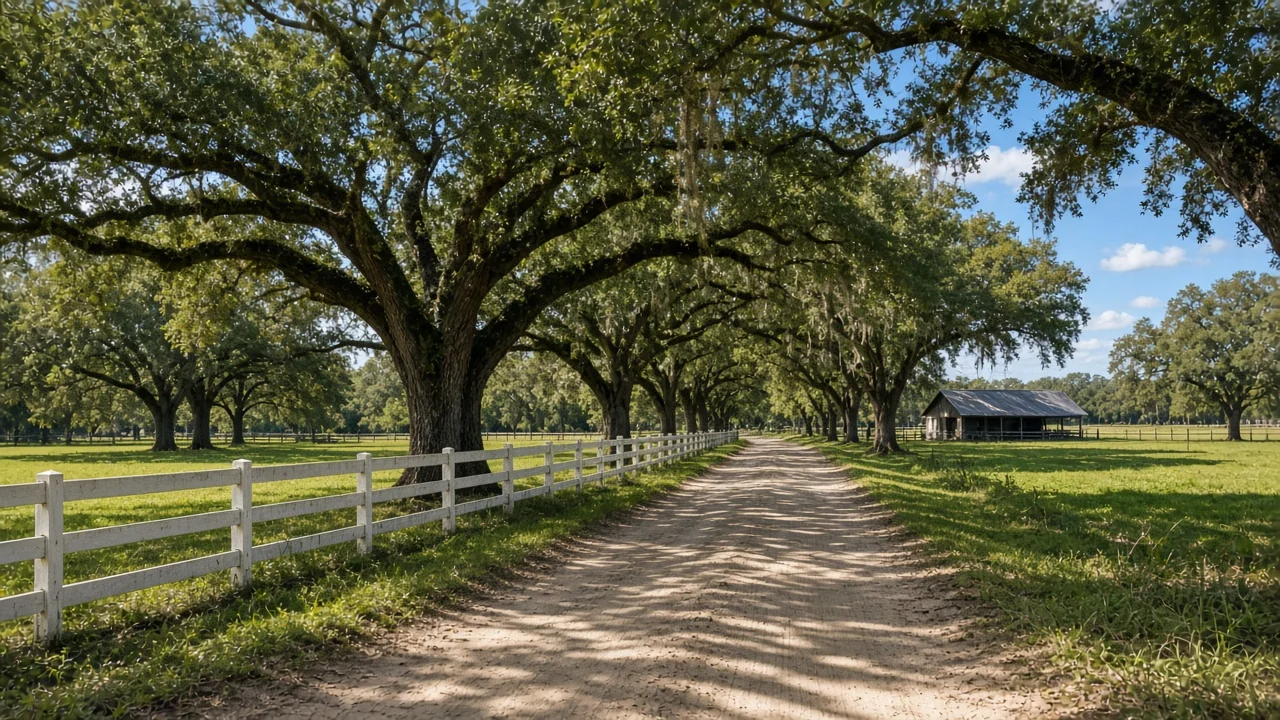
Two public facilities anchor the south and southwest side. The Florida Agricultural Center and Horse Park Authority was created by the Legislature in 1996. It operates as a direct-support organization under the Department of Agriculture on 500 acres the state owns. The department’s page describes a covered arena, 12 barns, four all-weather outdoor arenas, a cross-country course, an RV facility, and permanent restrooms. Since 2006 the park has hosted more than 800 events, and the department says most of the shows are free to the public. The Ocala/Marion visitors directory places it at 11008 County Road 475, less than 10 miles south of downtown Ocala. The park’s own questions page says Marion County does not own it. The World Equestrian Center’s directions put the Ocala grounds at 1750 NW 80th Avenue. WEC, HITS Ocala, and the Horse Park are showgrounds. A horse that spends the season in this county lives at a boarding barn, a training barn, or a private farm, and ships to those grounds.
Ross Prairie State Forest is the riding land next door to that geography. The Florida Forest Service puts it at 3,542 acres, acquired in 1995, about 10 miles southwest of Ocala, with access off State Road 200. Equestrian users have 15 miles of designated trails on service roads and fire lines. The main access is the Ross Prairie Trailhead on State Road 200, a mile south of County Road 484, managed by the Department of Environmental Protection’s Office of Greenways and Trails, with equestrian parking, a campground, restrooms, and picnic pavilions. The forest page says those trails sit in addition to the equestrian trails on the Marjorie Harris Carr Cross Florida Greenway, which borders the forest on the north. A negative Coggins test is required for every horse on every Florida state forest. The day-use pass for state forests is $2. The annual pass is $45.
The roads through the middle of this grid are a construction file, not a scenery file. FDOT project 452074-1 is adding auxiliary lanes on Interstate 75 from State Road 200 to State Road 326: an 8-mile job, a construction cost of $242 million, work that began November 3, 2025, and an estimated completion in early 2029. State Road 200 is also the Ross Prairie approach. A farm showing at dusk and a lane closure on that interstate are the same evening for a buyer coming from Tampa.
Southwest Marion is also where the new houses and the new high school are. The Ocala metropolitan area, which is Marion County under the definition used for the permit tables, authorized 362 housing units in August 2026, 342 of them one-unit. That count is the Census permit briefing. South Marion High opened near Marion Oaks on 115 acres, with an opening capacity of 2,011. Marion Oaks is a residential growth pocket. It is a different purchase from a training barn on the farm grid north and west of the city. A buyer who wants both a school zone and a boarding business should say so at the first conversation, because those two maps only overlap in places.
Levy and the Gulf end of the Greenway
Levy is the county northwest of Marion, and it is the reason this belt can be called a west-coast geography without pretending Ocala is a beach town. The census average farm is 200 acres, against Marion’s 87. Equine sales of $11.6 million are third in the state. Cropland is the larger land use, at 70,837 acres against 53,730 of pasture, so a Levy tract can be a hay-and-cattle place with a horse barn, or a horse place with a crop field. Williston is the town the farm roads use. The census profile does not print a city horse count, and this page will not invent one.
The Marjorie Harris Carr Cross Florida Greenway is the public land that makes the Gulf connection literal. The Department of Environmental Protection’s unit management plan describes a corridor of 110 miles from Yankeetown, on the Gulf, to south of Palatka on the St. Johns River. The counties on that corridor are Citrus, Levy, Marion, and Putnam. The communities the plan names along it include Yankeetown, Inglis, Dunnellon, Ocala, and Belleview. The Greenway ranges from a few hundred yards wide to about a mile wide. It is a recreation corridor through the horse country, not a subdivision, and it is not a promise that a private farm next to it has a trail easement. Trail access is the trailhead’s access. A fence line on a listing photo is not a greenway permit.
The Withlacoochee River is the other west-flowing line. The forest service describes a river of about 70 miles from the Green Swamp in northern Polk County to the Gulf at Yankeetown, with 13 miles of that river inside Withlacoochee State Forest, and with the river, the Little Withlacoochee, and Jumper Creek designated Outstanding Florida Waters. Dunnellon’s 2,022 people sit on the Marion side of that river system. Yankeetown sits on the Levy side, at the Gulf end. A buyer who says “west coast” and means a boat behind the house is looking at a different product from a buyer who means a farm that can reach the Greenway.
Citrus and Pine Ridge
Citrus is the smaller commercial equine county in this set. Sales of $503,000 rank 16th. The inventory is still 1,089 horses and ponies, and pasture is 27,493 of the county’s 51,098 farm acres, more than half the farm land. The useful residential name is Pine Ridge, near Beverly Hills. Pine Ridge was laid out for acreage and horses: homesites commonly from about half an acre to five acres or more, a lighter association fee than the golf communities, and deed restrictions that still control animals, outbuildings, and trailers. Not every lot carries the same animal rights. The community guide is the street-level file. This page is the county context around it.
The Florida Forest Service publishes a Citrus horse-trail brochure for Withlacoochee State Forest, separate from the Croom brochure in Hernando. That is the public riding land on the Citrus side of the same forest. The Citrus County market overview is the housing file next to it: Nature Coast towns, a smaller commercial base than Hernando or Pasco, and a buyer pool that already includes people who came for land rather than for a master-planned amenity package. Black Diamond and Citrus Hills are the golf products in the same county. They are a different Saturday from a Pine Ridge paddock.
Hernando, Brooksville, and the forest
Hernando’s equine sales are $2,109,000, tenth in Florida, on 1,466 horses and ponies. Land in farms rose 34 percent from 2017, to 67,187 acres. Pasture is 26,389 acres. The average farm is 88 acres, close to Marion’s average and far below Levy’s. The county is large enough for a real horse keeping, and it is not a second Ocala sales pavilion.
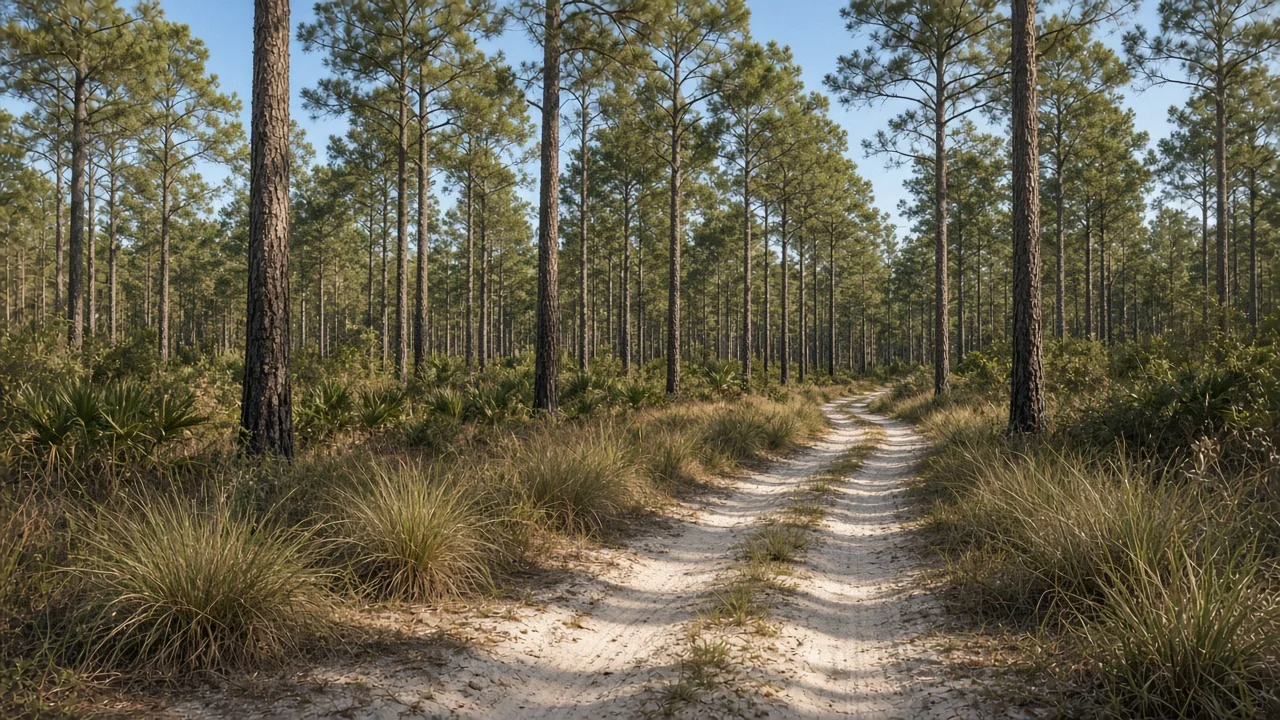
Withlacoochee State Forest is the public landscape that makes Brooksville a riding town. The forest service puts the forest at 164,073 acres, currently the third-largest state forest in Florida, in Citrus, Hernando, Lake, Pasco, and Sumter. Headquarters is the visitor center at 15003 Broad Street, Brooksville, on U.S. 41 about seven miles north of Brooksville and about 50 miles north of Tampa. Day use runs sunrise to sunset. The same $2 day pass and $45 annual pass apply, and the same Coggins rule applies. The forest page publishes a Croom horse-trail brochure. Croom is the Hernando tract riders mean when they talk about miles of sand road under longleaf and oak, east of Brooksville along the river. The page also publishes hiking, bicycle, and motorcycle brochures for Croom. A motorcycle area of 2,600 acres is a different use on the same forest. It is not the horse trail.
Brooksville is the county seat and the service town for that north-and-east farm country. Spring Hill is the suburban city to the southwest, built out along commercial arterials and the Suncoast Parkway. Weeki Wachee is the springs side farther west. The Hernando market update and the Weeki Wachee Gardens guide are those residential files. A rezoning at Spring Hill Drive and the Suncoast, H-22-26, is a commercial-and-multifamily entitlement on 37.06 acres. It is not a horse-farm subdivision. A buyer comparing a Brooksville pasture with a Spring Hill lot is comparing two products that share a county name.
Flood and insurance attach to the parcel, especially on the river side of Croom and on any low pasture. The Hernando flood and insurance guide is the paperwork: a determination and a quote on the address, before the offer gets romantic about the oaks. The forest’s own description of wetlands, cypress, and a river that floods its floodplain is the reason.
Pasco: east-county acres and the Starkey trails
Pasco is two horse geographies in one census line. The county had 1,854 horses and ponies and $3,103,000 in equine sales, sixth in Florida and 81st in the United States, on 71,564 acres of pasture. It also lost 31 percent of its land in farms between the 2017 and 2022 censuses, down to 132,011 acres. The profile does not split those horses between east and west. This page will not invent that split.
East Pasco is the acreage a buyer means when the search is Dade City, San Antonio, St. Leo, and the rural land toward the Green Swamp and the Withlacoochee. Dade City is the town guide: a real downtown, U.S. 301, and a county seat that is not Wesley Chapel. The master-planned side of the same county is a different purchase. Wesley Chapel and Land O’ Lakes are the I-75 and Suncoast growth maps. A five-acre pasture and a new-construction lot in Wiregrass can both say Pasco on the tax bill. They do not share a buyer.
West and central Pasco’s public riding land is Jay B. Starkey Wilderness Park. Pasco County’s park listing describes a regional park of more than 8,300 acres, run with the Southwest Florida Water Management District, at 10500 Wilderness Park Boulevard, New Port Richey. The listing includes a horse corral, equestrian camping, and a 10-mile equestrian trail, plus 13 miles of hiking trails and 7.3 miles of paved trail. The paved trail connects to the Suncoast Trail, which the county describes as 42 miles along the west side of the Suncoast Parkway through Hillsborough, Pasco, and Hernando. That paved trail is a bicycle and walking facility. It is not the horse trail. Dogs are allowed on a leash on the hiking and paved trails. The county listing says dogs are not allowed on the equestrian trail. The park is open dawn to dusk.
The district’s preserve sheet prints a second mileage: approximately 20 miles of trail available for equestrian use throughout the Starkey Wilderness Preserve, with staging on the west side and a trailhead off State Road 52. The county’s 10 miles and the district’s 20 miles are two official descriptions of overlapping public land. A rider should use the map for the entrance they actually park at. Starkey Ranch, the master-planned community in Odessa, sits next to the preserve and sells schools, trails, and a Tampa commute. It is not the park, and a Starkey Ranch lot is not a horse farm because the preserve is nearby. Read the community documents before you assume a paddock is allowed.
The Pasco market overview is the housing file, and the Pasco flood guide is the insurance file. East-county acreage can be dry sandhill or it can be wet toward the river and the Green Swamp. The census cannot see the lot. The elevation certificate and the flood determination can.
Hillsborough on the south edge
Hillsborough had more horses on farms than Pasco or Hernando: 2,564, against Pasco’s 1,854 and Hernando’s 1,466. Equine sales were $2,869,000, seventh in the state, a step behind Pasco’s $3,103,000. Pastureland was 74,675 acres inside 201,712 acres of farmland. The county’s agricultural economy is much larger than its horse line. Total farm sales are a different order of magnitude from Marion’s horse-led sales, because Hillsborough’s farms sell crops, nursery products, and other livestock at a scale this page is not retelling.
The acreage a horse buyer actually tours is the northwest edge, where Lutz transitions into Odessa and Pasco. South Tampa, Hyde Park, and the bay islands are not this search. A Hillsborough horse property is an acreage file with a county services and school question, often a well and septic question, and a zoning question. The census rank says the animals are here. It does not say a standard subdivision lot can hold them.
Sumter belongs in the same sentence because the forest and the farm census both include it. 1,614 horses and ponies, $848,000 in equine sales, rank 12, and 61,499 acres of pasture. Sumter is also the county of The Villages’ growth. A horse property there and a new house in a age-restricted village are both Sumter, and they are not substitutes. Withlacoochee State Forest’s county list includes Sumter. That is the public land. The village is the other land use.
Boarding barns and training programs
The census counts horses on farms. It does not tell a rider where to send a horse on Monday. The facilities below are published examples of the different products on this belt: a show-jumper training barn, a dry-stall barn built for outside trainers, a retirement and layup farm, a lesson academy, and a schooling-show grounds. They are not a ranking, and they are not the whole directory. Stall counts, board rates, and openings are what each barn prints. They change. Call the barn before you budget a move, and read the contract for what “full board” includes.
Ocala show barns
Five Phases Farm sits on 60 acres at Epona Equine Center and says it is about 10 minutes from both the World Equestrian Center and the HITS showgrounds. The farm’s page says it takes hunter/jumpers, eventing horses, combined-driving horses, racehorses, and dressage horses, and that it starts and trains horses, including stallions and colts, for dressage, jumping, driving, and eventing. The published facility list includes three block barns, 12-by-12 matted stalls, four oversized foaling stalls, a grass arena, a grass jump field, a half-mile track, a half-mile turf track, and a horse swimming pool. Feed is described as two or three times a day, hay three times a day, with daily turnout and someone living on the farm. The phone on the page is 352-229-7739. The page does not print a street address.
BluSalt Farm, at 6275 NW 100th Street, Ocala, is a show-jumping training and full-board barn. The farm describes a 150-by-250 all-weather arena, a 150-by-200 sand arena, a round pen, a grass field, and 12-by-12 stalls with automatic waterers. It says the property sits next to Norm Westbrook Park’s equestrian trails, which the farm describes as 1.5 miles of trail and obstacles, and that the drive to WEC, HITS, and the Florida Horse Park is a matter of minutes. The program on the page is rider development and producing jumpers, plus buying and importing show horses. The phone is 760-855-3231.
High Standards Farm, at 721 NE 63rd Street, Ocala, describes itself as a 10-acre show-jumping barn offering seasonal and annual full board. The page says the farm is within 20 minutes of WEC, HITS, and the Florida Horse Park, and it names Majestic Oaks and Sweet Dixie South as nearby schooling venues with jump arenas and cross-country courses. Posted hours are Tuesday through Sunday, 7 a.m. to 6 p.m. The phone is 352-804-9667.
Riviere Equestrian Farm, at 7536 NW 90th Avenue, Ocala, says it opened in March 2022 with 22 stalls and a 220-by-120-foot arena, about 7 miles from WEC and from HITS. The products on the page are full board, a dry stall, and retirement board, with turnout. That is a care-and-retirement barn next to the show circuit, not a jumper program with a published show calendar. The phone is 407-314-1851.
Those four Ocala addresses are four different contracts. Five Phases and BluSalt are training programs. High Standards is full board aimed at show jumpers, seasonal or annual. Riviere is board and retirement. A dry stall usually means the owner supplies more of the feed and the labor. Full board usually means the barn feeds, cleans, and turns out. Training board adds rides or lessons. The barn’s page is the definition. Do not assume the words match from one farm to the next.
Morriston, on the Levy side of the shows
Diasti Stables, at 5350 SE 212th Court, Morriston, is the trainer-host barn in this set. Morriston is in Levy County, on the northwest side of the Ocala show grounds. The farm’s page says the property is more than 110 acres, about 5 minutes from HITS and 15 minutes from WEC. It lists four barns: Grand Oak with 34 stalls, Evergreen with 16, Chestnut with 9, and Laurel with 9. That is 34 plus 16 plus 9 plus 9, or 68 stalls. The boarding line on the page is dry stall and partial care, not a single full-board package. Arenas listed are a 110-by-210 dressage ring and a 150-by-300 jumping ring, both described as GGT footing, plus a grass jumping ring and a round pen. The page also lists 11 apartments, 5 RV hookups, and about 3 miles of trails on the farm. Hours posted are Tuesday through Friday, 7 a.m. to 5 p.m. The phone is 352-355-9921. A professional who wants to run a business out of someone else’s barn is the client this page is written for. An owner who wants the barn to feed, train, and show the horse is looking at a different contract, and should ask whether partial care is the only board on offer.
Brooksville care farms and a schooling grounds
Country Oaks Equestrian in Brooksville publishes the opposite product from the Ocala show barns. The farm’s page calls it a private family boarding farm on 60 acres, and it says it is not a show barn and not a training facility. The published setup is a barn of 20 or more stalls, an indoor arena, an outdoor arena, a round pen, a half-mile exercise track, and about 30 acres of groomed trails. The page lists full-care stall board at $850 a month and a pasture board, called Pasture Plus, at $550 a month. Those are the farm’s posted rates, not a Hernando County average. Full-care board on that page includes grain, timothy and alfalfa hay, twice-daily feeding, stall cleaning, a fly-spray program, blanketing, and vet and farrier holding, with turnout on the horse’s schedule. The farm says it is not accepting stallions, that a current negative Coggins is required, and that a tour comes before a stall. The page does not print a street address. Ask for it when you call.
Fannin Hill Farm, at 29499 Wildlife Lane, Brooksville, is a schooling-show grounds, not a monthly training barn. Its calendar is the LAJUF hunter, jumper, and dressage schooling shows, and the site also posts cross-country schooling. Show bills on the site price a stall for the show weekend and say stalls are limited and have to be reserved. That is temporary stabling. A horse that lives in Hernando the rest of the month needs a boarding contract somewhere else, or a barn on the owner’s land. The phone on the farm’s page is 206-331-8268. Brooksville can hold both things at once: a quiet board bill at a place like Country Oaks, and a local show weekend at Wildlife Lane, about a short drive from the Withlacoochee forest rather than a haul to Ocala.
Pasco: Dade City board, and an Odessa lesson barn
Black Grove Stables, at 30833 St. Joe Road, Dade City, is the east-Pasco care barn in this set. The page says the farm is near I-75 off Saint Joe Road and offers full and partial board, retirement, mare care and foaling, layup and recovery, and post-operative care. It also lists lessons-style horse-care classes and off-site sitting. The phone is 813-395-2231. The page does not print a stall count or a monthly rate. Ask for both, and ask what “partial” leaves on the owner.
Grand Pine Farm, at 19129 Burke Road, Dade City, is the east-Pasco training barn. The farm’s page describes 15 acres, hunter, equitation, and jumper horses, individual paddocks, a 150-by-150 arena, and a grass field with a derby course. It offers lessons, training, and sales or lease horses, and it names a USEF “R” licensed official on the instruction side. The phone on the page is 813-309-8586. Any dollar figure for training board should come from the farm at the time you ask. A rate printed on a booking widget can be retired even when the program is not.
Suncoast Stables and Riding Academy, at 1108 Altamont Lane, Odessa, is the west-Pasco lesson barn. The page says it was founded in 2007 and offers a lighted covered arena, an open arena, stalls, wash racks, and pastures. The breeds it names are American Saddlebreds, Morgans, Arabians, hackneys, and roadsters. Lessons are saddleseat, dressage, western, and hunt seat. Boarding, training, and leases are on the same page. The page says the barn does not offer trail riding. That matters in Odessa, because Starkey Ranch and Jay B. Starkey Wilderness Park are the trail story next door. A lesson at Suncoast is an appointment on Altamont Lane. A ride in the preserve is a different gate, and the preserve does not board your horse. Training is by appointment. The phone is 813-368-0666.
Citrus, where the barn is often the owner’s
Citrus does not publish a show-barn row the way northwest Ocala does. The residential version of keeping a horse is Pine Ridge, near Beverly Hills, where the lot and the deed restrictions decide whether a private barn is allowed. A buyer who wants someone else to feed the horse every day should ask the specific barn what board it still offers, and should not treat an old directory listing as a current stall. The Citrus overview is the housing context. The forest’s Citrus horse-trail brochure is the public ride. Those two files, plus the restriction sheet on the lot, are the Citrus equestrian purchase. A haul from Pine Ridge to a Brooksville schooling show or to an Ocala training barn is a drive, not a substitute for reading the lot.
What a buyer checks before the offer
The first cut is the use, not the county slogan. A training barn with a show schedule belongs on the Marion and Levy farm grid, near the Horse Park, the sales calendar, and the veterinary depth the department’s page is describing. A few horses on acreage can be Hernando, east Pasco, Citrus at Pine Ridge, or a Hillsborough edge lot, if the zoning and the restrictions allow them. A house whose owner wants to ride, and does not need a barn business, can sit near Starkey, Croom, Ross Prairie, or a Greenway trailhead and keep the horses somewhere else. Those are three purchases. Mixing them produces a pretty drive and a bad contract.
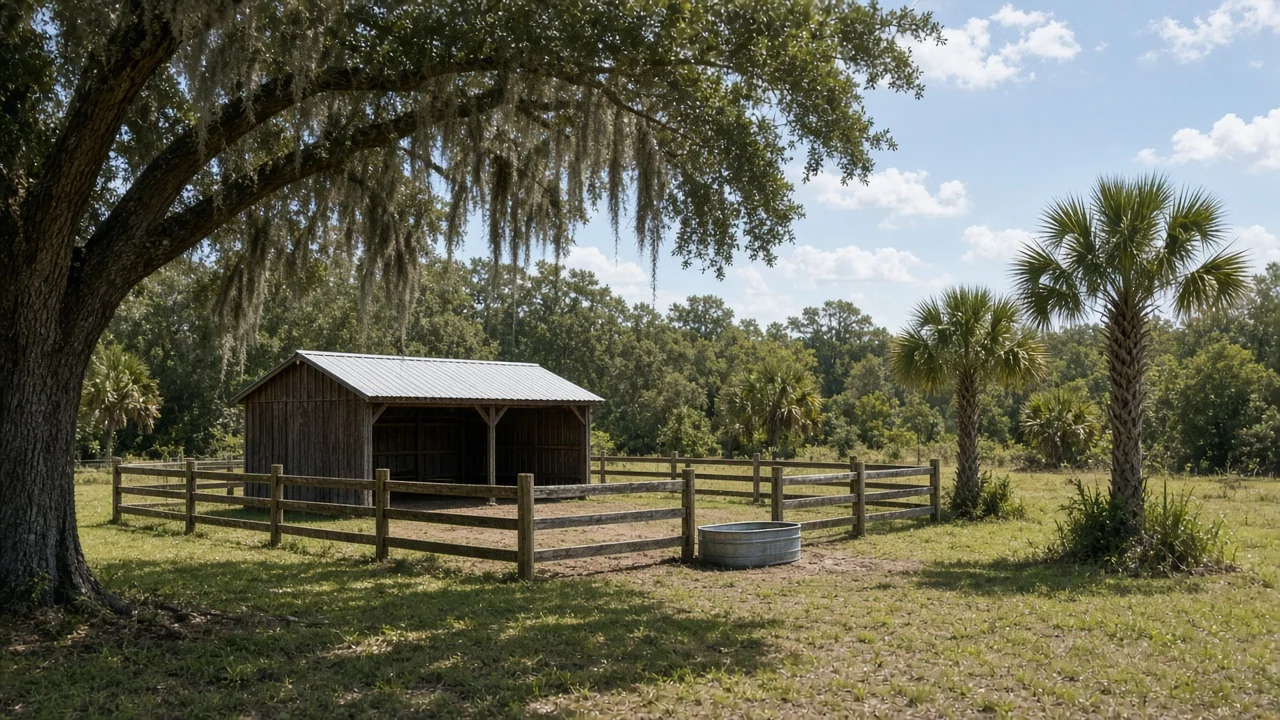
Zoning is the second cut. Agricultural zoning is a district. It is not a promise that the property appraiser has granted an agricultural classification, and it is not a promise that an association will allow a horse. Pine Ridge is the local example already on this site: equestrian use is the community’s identity, and the specific lot still has to be read. A master-planned village in Pasco or Hernando can ban livestock on a lot that looks large in a photograph. Read the zoning district, the recorded restrictions, and the association rules before you price the fence.
The agricultural classification is the tax cut people mean when they say greenbelt. The department’s industry page states that Florida’s greenbelt classification provides a property-tax break for horse farms. The classification itself is section 193.461 of the Florida Statutes: the property appraiser classifies land as agricultural when it is used for a bona fide agricultural purpose. A horse in the yard is not the classification. Boarding, breeding, and training operations are the uses the department’s equine manual is written for. The appraiser page is where a specific parcel’s classification gets read. This page does not print a tax savings, because the savings are the difference between the agricultural assessment and the just value on that parcel, after the appraiser acts.
The department’s industry page also lists the statewide tax items horse businesses ask about: no personal state income tax, no tax on stallion seasons, a sales-tax exemption when a horse is bought from its original owner, and sales-tax exemptions on feed and specified animal-health products. Those are state rules on the department’s page. They are not a tax opinion on one bill of sale. A buyer of a going concern should have the accountant and the appraiser look at the same property the agent is walking.
The physical file is the part the census cannot see. Usable pasture is not the same as deeded acres. Wetland, sinkholes, and a flood zone can take the middle of a pretty field. Fencing, water, a well, septic, a barn, an arena footing, trailer access, and a manure plan are the improvements that change what the property can do. A negative Coggins is required to use the state forests, and it is the ordinary health paper for moving a horse. Section 773.06, Nicole’s Law, requires a rider younger than 16 to wear a properly fitted helmet that meets the current ASTM standard for equestrian headgear. That is a household rule on any of these properties, public trail or private ring.
Financing an acreage property is a different loan conversation from financing a subdivision house. Acreage, outbuildings, and a well-and-septic system change what a lender will treat as the dwelling. The weekly rate tape is the Freddie Mac survey. A rate is not an approval. Get the quote on the property type you are actually buying.
There is no county median on this page. Marion’s 13.6 horses per reporting farm is an average pulled by training barns, while 58 percent of Marion farms are 10 to 49 acres. A five-acre Hernando lot and a 200-acre Levy tract do not belong in one price sentence. Use closed sales of similar acres, similar improvements, and a similar zoning result. Bridge Point’s buying team can keep an Ocala training farm, a Brooksville pasture, and a Pasco acreage from being priced as if they were one product.
What a seller prepares
A horse property sells to a buyer who already knows the difference between a run-in shed and a training barn. The listing should say which one it is. Usable acres, water, fencing, and the restriction file belong in the first packet, not in a later surprise. If the property appraiser has classified part of the land as agricultural, the seller should have the classification printout, and the buyer should be told that a change in use can change the assessment. If an association allows horses only in one section, say the section.
Price from comparable acreage, not from a subdivision on the other side of the county and not from a state average. The pricing guide is the method: recent sales, condition, and the real competition. In Marion, the competition may be another improved farm. In Pasco, the competition may be a buyer who is also looking at Dade City and at Hernando. In Citrus, the competition for a Pine Ridge lot is another Pine Ridge lot, and sometimes a Beverly Hills or Citrus Springs acreage with a different rule on animals. Selling services can assemble that set.
Outbuildings need the same honesty as the house. A barn with a roof problem, an arena that does not drain, or a well that cannot water the herd will be discovered. Sellers who document permits, surveys, and the septic or sewer status spend less time renegotiating. Trailer access and road frontage matter on a farm lane that looks charming and then fails a gooseneck on a Saturday.
How to choose among them
Choose Marion, and the Levy farms that continue the same limestone country, when the horse is the business or the sport is the reason for the move. The census sales, the Horse Park, the show calendar the department names, and the unincorporated farm grid are all there. Budget the I-75 work through early 2029 if the commute uses State Road 200 to State Road 326. Keep Marion Oaks and the new high school in a separate column if a school seat is part of the household.
Choose Hernando when you want Brooksville, the Croom side of a 164,073-acre forest, and a smaller equine sales economy with farm acres that have been growing. Keep Spring Hill and Weeki Wachee as the suburban and springs alternatives in the same county, not as the farm.
Choose Pasco when you want either east-county acres around Dade City or a house near the Starkey trails, and when you have already decided you are not buying Wesley Chapel. The 31 percent drop in land in farms is the context: the horse inventory is real, and the county is also converting land. Confirm the lot before you fall in love with the rank.
Choose Citrus when Pine Ridge, or a similar acreage near Beverly Hills, is the residential version of keeping horses, with the Citrus tract of the state forest as the longer ride. The commercial sales figure is the small one in this set. The lifestyle inventory is not zero.
Choose the Hillsborough edge when the job or the school is in Lutz, Odessa, or north Tampa and the land still has to work for horses. The county has more farm horses than Pasco. It does not have Marion’s sales economy.
For a parcel in any of these counties — Marion, Levy, Citrus, Hernando, Pasco, Sumter, or Hillsborough — contact Bridge Point Business & Real Estate Advisors at 352-515-0226 or request a consultation.
Sources: USDA National Agricultural Statistics Service, 2022 Census of Agriculture, Florida county profiles for Marion (cp12083), Levy (cp12075), Hillsborough (cp12057), Pasco (cp12101), Sumter (cp12119), Hernando (cp12053), and Citrus (cp12017), including the December 31, 2022 livestock inventory and the market-value table for horses, ponies, mules, burros, and donkeys. USDA NASS, 2022 Census of Agriculture, Table 18, Equine — Inventory and Sales, Florida county file, for the 9,832 farms, the 83,114 horses and ponies, the 2017 comparisons, and the 1,761 Marion farms reporting horses. USDA NASS, Ranking of Market Value of Agricultural Products Sold, Florida, 2022, for the state equine sales total of $214,890,000. Florida Department of Agriculture and Consumer Services, Florida Horse Industry page, for the Horse Capital heading, the 1930s farm history, the named Ocala-Marion venues, Ocala Breeders’ Sales from 2010 to 2018, the Florida Horse Park’s 1996 creation, 500 acres, direct-support status, facilities, and 800 events since 2006, the greenbelt sentence, the sales-tax items, and section 773.06. FDACS, Florida Equine Operations Water Quality and Water Quantity Best Management Practices, 2024 edition, FDACS-P-01531, incorporated in Rule 5M-14.002, Florida Administrative Code, for the citations to the 2023 American Horse Council report on the 332,000 horses, the $12.78 billion impact, the 87,600 Thoroughbreds, the 561,000 acres, and the Marion acreage figures, and for the statement that the highest density of equine operations is in Marion County. FDACS, Ross Prairie State Forest and Withlacoochee State Forest pages, for acreage, trail miles, passes, the Coggins rule, the Brooksville headquarters address, and the river description. Ocala/Marion County visitors directory, Florida Horse Park listing, for 11008 County Road 475. Pasco County parks listing for Jay B. Starkey Wilderness Park, 10500 Wilderness Park Boulevard, New Port Richey, for the 8,300 acres, the 10-mile equestrian trail, the corral, and the Suncoast Trail description. Southwest Florida Water Management District, Starkey Wilderness Preserve sheet, for the approximately 20 miles of equestrian trail on the preserve. Florida Department of Environmental Protection, Marjorie Harris Carr Cross Florida Greenway unit management plan, for the 110-mile corridor from Yankeetown through Citrus, Levy, Marion, and Putnam. University of Florida Bureau of Economic and Business Research, Florida Estimates of Population 2025, as reported in the Marion population briefing, for the April 1, 2025 counts. Florida Department of Transportation project 452074-1, as reported in the I-75 briefing. U.S. Census Bureau Building Permits Survey, August 2026, Ocala metro, as reported in the Florida permits briefing. World Equestrian Center, Ocala directions, for 1750 NW 80th Avenue. Facility pages for stall counts, board types, addresses, and phones: Five Phases Farm, BluSalt Farm, High Standards Farm, Riviere Equestrian Farm, Diasti Stables, Country Oaks Equestrian, Fannin Hill Farm, Black Grove Stables, Grand Pine Farm, and Suncoast Stables and Riding Academy. A posted board rate is that farm’s rate.
Questions people ask first
Quick answers to common questions about this topic.
Where are the main equestrian areas on Florida’s west coast?
The farm belt inland of the Gulf, not the beaches. Marion County, around Ocala, had 23,928 horses and ponies on farms in the 2022 Census and $139.5 million in equine sales, first in Florida. Levy County is next in sales, at $11.6 million and 4,927 horses. Pasco, Hernando, Citrus, Sumter, and northwest Hillsborough carry smaller inventories and their own public trails, including Jay B. Starkey Wilderness Park, the Croom tract of Withlacoochee State Forest, and Ross Prairie.
How many horses are in Marion County and in Florida?
On farms, the 2022 Census of Agriculture counted 23,928 horses and ponies in Marion County and 83,114 in Florida. Marion was 28.8 percent of that farm inventory. The Florida Department of Agriculture’s 2024 equine manual cites a 2023 American Horse Council figure of more than 332,000 horses in the state. The census is the farm count. The council figure is a broader population. Use the census to compare counties.
Is Ocala on the west coast?
Ocala is inland Marion County, and it is the center of the horse economy whose public land drains west. The Cross Florida Greenway runs 110 miles from Yankeetown on the Gulf through Dunnellon and Ocala. The Withlacoochee River runs about 70 miles from the Green Swamp to the Gulf at Yankeetown. A beach house and an Ocala farm are different purchases that can share a Gulf-side map.
Can you keep horses in Pasco or Hernando County?
The census says the animals are already there: 1,854 horses and ponies in Pasco and 1,466 in Hernando. Whether a specific lot may keep them depends on the zoning district and any recorded restrictions or association rules. A master-planned village can prohibit livestock. Agricultural zoning is not the same thing as an agricultural tax classification. Read the parcel before you rely on the county total.
Where can you ride on public land near Ocala, Brooksville, and Pasco?
Ross Prairie State Forest, about 10 miles southwest of Ocala, has 15 miles of designated equestrian trails and borders the Cross Florida Greenway. Withlacoochee State Forest, 164,073 acres with headquarters on U.S. 41 north of Brooksville, publishes horse-trail brochures for the Croom tract and the Citrus tract. Jay B. Starkey Wilderness Park in New Port Richey lists a 10-mile equestrian trail; the water management district’s preserve sheet lists about 20 miles on the larger preserve. State forests require a current negative Coggins test. The day pass is $2.
What is the Florida Horse Park?
The Florida Agricultural Center and Horse Park was created by the Legislature in 1996. It is a direct-support organization under the Florida Department of Agriculture on 500 acres the state owns, at 11008 County Road 475, less than 10 miles south of downtown Ocala. The department describes a covered arena, 12 barns, four outdoor arenas, a cross-country course, and RV sites. It is not owned by Marion County. Since 2006 it has hosted more than 800 events.
Does a horse property automatically get a greenbelt tax break?
No. The department’s industry page says Florida’s greenbelt classification provides a property-tax break for horse farms. The classification is granted by the property appraiser under section 193.461 when the land is used for a bona fide agricultural purpose. A horse on the lot is not the classification. Boarding, breeding, and training are the uses the department’s equine manual covers. A change in use can change the assessment.
Where can I board or train a horse near Ocala, Brooksville, or Dade City?
Near the Ocala shows, Five Phases Farm at Epona Equine Center trains several disciplines on 60 acres about 10 minutes from the World Equestrian Center and HITS. BluSalt Farm at 6275 NW 100th Street is a show-jumping full-board barn. High Standards Farm at 721 NE 63rd Street offers seasonal and annual show-jumper board on 10 acres. Riviere Equestrian Farm at 7536 NW 90th Avenue has 22 stalls for full board, dry stalls, and retirement, about 7 miles from those showgrounds. Diasti Stables in Morriston, Levy County, lists 68 stalls and dry or partial care for outside trainers. In Brooksville, Country Oaks Equestrian posts full-care board at $850 a month and pasture board at $550, and Fannin Hill Farm at 29499 Wildlife Lane is a schooling-show grounds with weekend stalls. In Pasco, Black Grove Stables on St. Joe Road in Dade City offers care, foaling, and layup. Grand Pine Farm on Burke Road trains hunters and jumpers. Suncoast Stables at 1108 Altamont Lane in Odessa is a lesson and boarding barn and does not offer trail rides. Rates and openings change. Confirm them with the barn.
What is the difference between full board, a dry stall, and training board?
Full board usually means the barn feeds, cleans the stall, and turns the horse out. A dry stall usually leaves more of the feed and the labor with the owner. Training board adds rides or lessons on top of the care. The words are not standard across barns. Five Phases and BluSalt publish training programs. Riviere publishes full board, dry stall, and retirement. Diasti publishes dry stall and partial care. Country Oaks publishes a full-care rate and a pasture rate. Read the contract for who calls the veterinarian, whether stallions are accepted, and how much notice it takes to leave.
What should a buyer check on west-coast equestrian acreage?
Confirm the use you actually want: a training farm, a few horses on acreage, or a house near a public trail. Then read zoning and restrictions, the flood determination, well and septic or sewer, fencing, water, barns, arena drainage, and trailer access. Price from comparable acreage sales. Marion’s average of 13.6 horses per reporting farm is pulled by larger barns, while 58 percent of Marion farms are 10 to 49 acres. Do not use one county median for all of these properties.
Talk with Bridge Point
Considering a purchase or sale in this market? Local guidance can make a meaningful difference.
Schedule a consultation
